
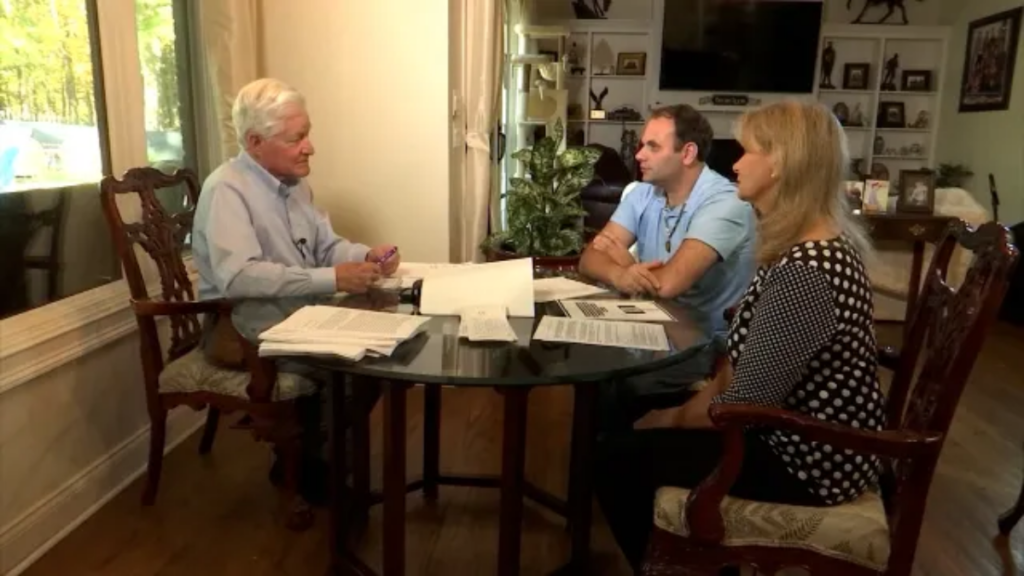
Jay Bryce has found the woman he wants to spend his life with. But a Social Security rule older than both his parents’ careers means a wedding could cost him almost everything he depends on.
A Love Story That Started on a Church App
Jay is 31, a Bearden High School graduate, and works two part-time jobs. He met Yuka Vorn 18 months ago on an app run by the Church of Jesus Christ of Latter-day Saints, where both are members.
Earlier this year, Jay and his parents flew to Cambodia so the couple could finally meet in person. His parents, Phil and Debbie, fully support the marriage.
“Yuka is everything to me,” Jay told WATE.
Where the Rule Gets in the Way
Jay was diagnosed with autism spectrum disorder as a child. At 18 he qualified for a small Supplemental Security Income payment. When his father retired and began drawing Social Security, Jay moved onto Disabled Adult Child benefits, known as DAC.
The program dates to 1958 and pays adults whose disability began before age 22, based on a parent’s work record. The catch is marriage. A DAC check stops with the month before the wedding month.
Jay says that would also wipe out his health coverage. His medication runs about $6,000 a month, and without it his hands shake uncontrollably.
His mother points out that a DAC recipient can live with a partner and keep everything. Only marriage triggers the loss.
The One Exception Does Not Help Him
Only a spouse who already draws certain Social Security benefits lets a DAC recipient stay on the rolls after the wedding. Someone who gets SSI alone does not count as a Social Security beneficiary for this purpose. Yuka lives in Cambodia, so the exception offers the couple nothing.
A Fix Is Sitting in Congress
The Marriage Equality for Disabled Adults Act would end the penalty. It first appeared in the House in 2022 and went nowhere. Rep. Jimmy Panetta brought it back on Valentine’s Day 2025. The current version, H.R. 1389, would let DAC recipients marry and keep their benefits.
It has not passed. The DAC rolls hold over a million Americans with lifelong disabilities, according to the advocacy group Disability Belongs.
Debbie and Phil are in their 70s. She says they will not be around forever, and she does not want her son to be alone.